Bathroom Doors: How to Choose the Right One? – Ventilation, Moisture Resistance, and Interior Design
The bathroom plays by its own rules. Steam, moisture, frequent opening and closing, and the need for privacy – all of this means that choosing a door for this room requires far more attention than for a bedroom or a living room. Making the wrong choice carries the risk of warping, mold on the frame, or a door that stops closing properly after just a year.
A good choice? A door that looks exactly the same after 10 years as it did on the day it was installed – and looks great while doing so. In this article, we explain what to look out for when choosing a bathroom door and which solutions will work best in various situations.
Ventilation in bathroom doors – why is it important?
A bathroom without proper ventilation is a fast track to mold, unpleasant odors, and moisture damaging the walls. Even if you have mechanical ventilation or a window vent, it is essential to ensure that air can flow freely through the door itself.
Inter Door bathroom doors can be equipped with several ventilation solutions:
Ventilation sleeves (sleeves) – discreet openings in the door leaf or frame through which air flows without visible grilles. Aesthetic and effective.
Stainless steel grilles – a more durable solution, resistant to moisture and rust. Most commonly installed at the bottom of the door leaf.
Ventilation undercut – a gap between the bottom edge of the door leaf and the floor that provides air circulation without any additional components. The simplest and most widely used solution in new buildings.
The choice depends on how the ventilation system works in your home. With natural (gravity) ventilation, an undercut or a grille is absolutely necessary — without free airflow, the ventilation simply won’t work.
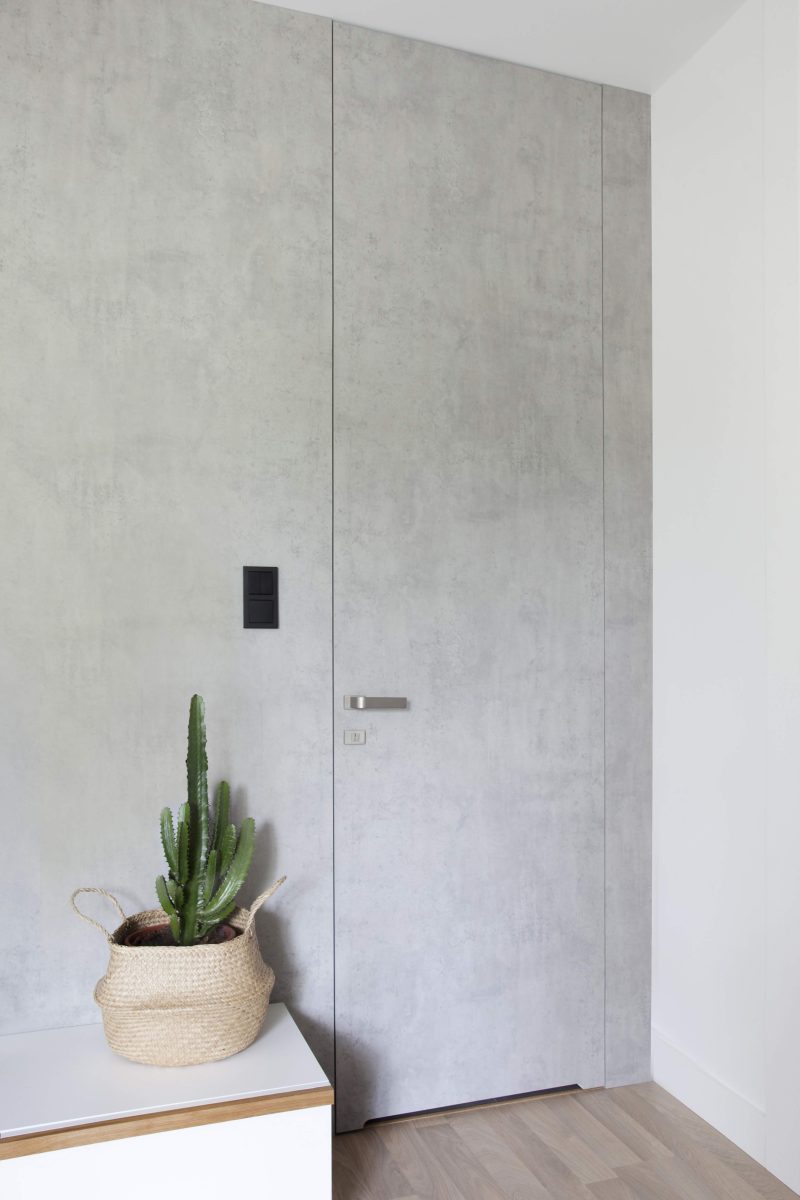
Bathroom doors – moisture resistance
The bathroom is a place with high humidity, which is why doors for this room must be resistant to water and steam. The best choices in our product range are doors made of materials such as:
-
Glass
Glass doors are an excellent choice for the bathroom due to their high resistance to moisture. Glass does not absorb water, making these doors resistant to mold and mildew. Additionally, glass doors are easy to keep clean and give the interior a modern look. You also don’t have to worry about your privacy, as we offer the option of frosted glass, allowing everyone to feel completely comfortable.
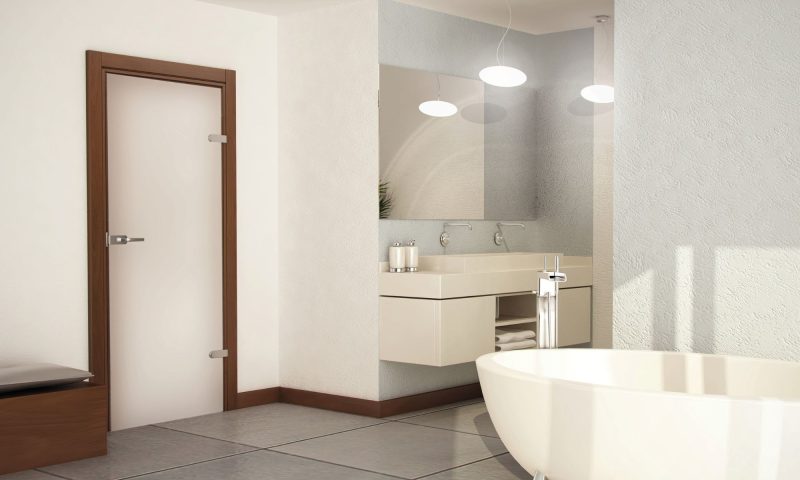
-
Moisture protection
If you prefer natural materials, choose wooden doors that have been properly protected against moisture both from the outside and inside. Examples include special door frames made of moisture-resistant material. In addition, the bases of the frames can be protected at floor level with a durable material – CORIAN, which provides an extra barrier against water.
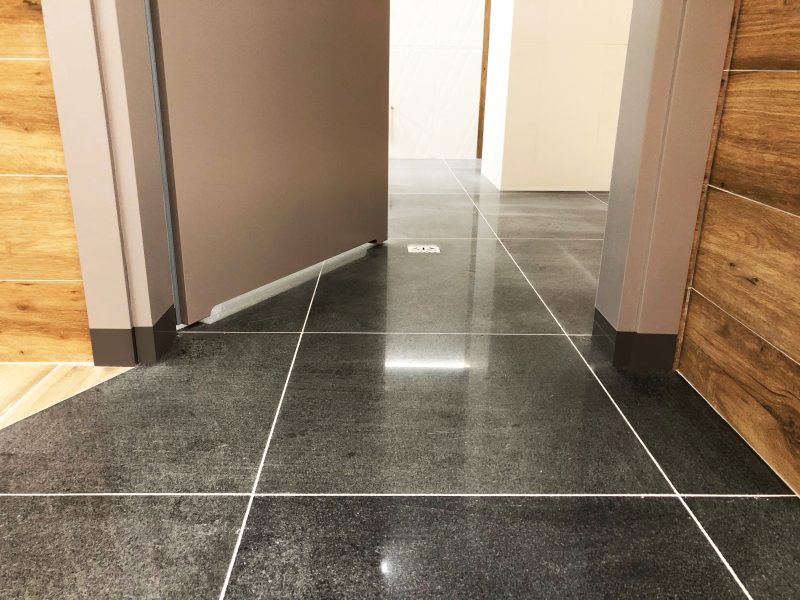
Glass bathroom doors – privacy and style in one
Glass in a bathroom door might sound risky, but in practice, it is one of the best solutions. It doesn’t absorb moisture, doesn’t warp, and is easy to clean. And what about privacy? This is where the choice of glass type comes into play.
Frosted glass (satin) allows light to pass through but prevents anyone from seeing inside. This is the most popular option for bathrooms — the interior remains bright while ensuring complete intimacy.
Sandblasted glass offers a similar effect but allows for the creation of patterns and decorative elements. It fits perfectly into Scandinavian or industrial styles.
Lacobel glass (back-painted glass) is an option for those who want a splash of color — available in many shades, it looks like a sleek, colored panel.
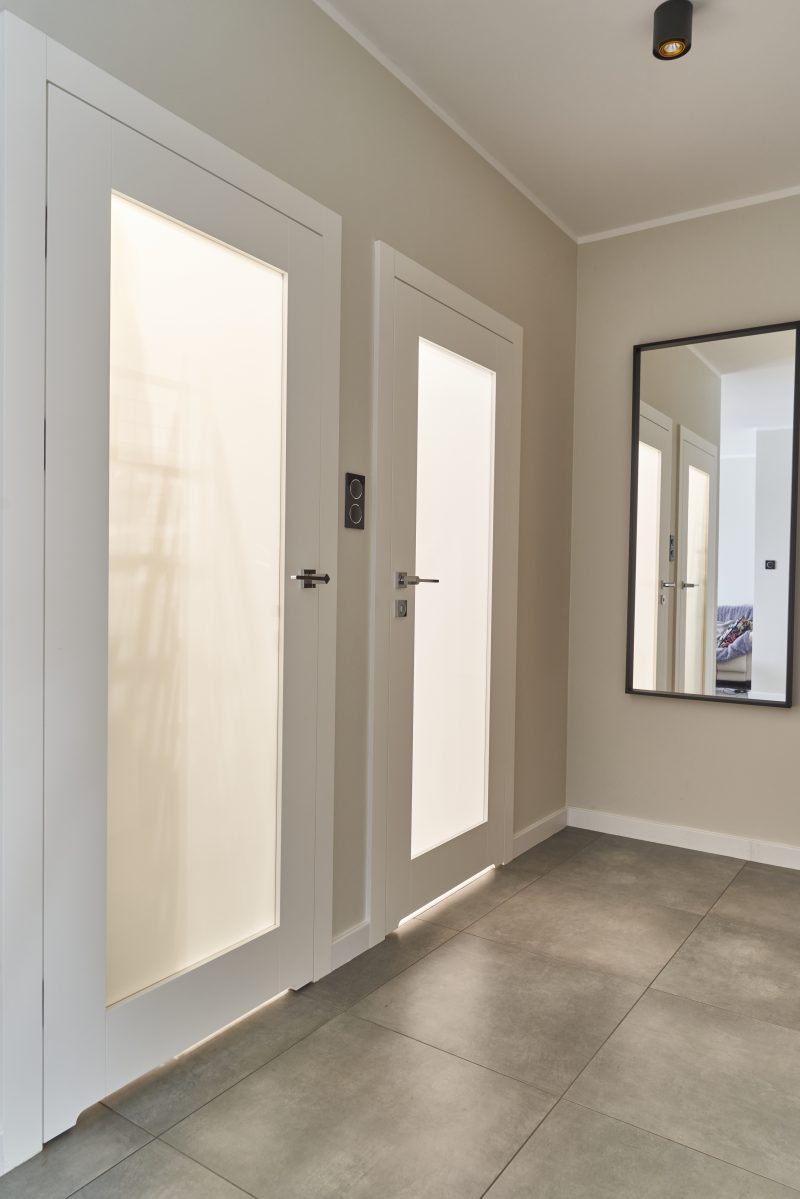
Doors with glazing have another practical benefit: the light turned on inside, visible through the glass, signals that the bathroom is occupied — no knocking or calling out required.
Hinged or sliding doors for the bathroom – which to choose?
This is one of the most frequently asked questions when planning a bathroom – and rightly so, because the answer depends on your specific situation.
Classic hinged doors are the standard that works in most cases. They are easier to install, simpler to seal acoustically, and often available in a wider variety of designs. The downside? They require clearance space to open – both on the bathroom side and the hallway side.
Sliding doors are the perfect solution wherever space is limited. The door leaf retracts into the wall (pocket door system) or slides along it. For small bathrooms or tight hallways, this is often the only sensible choice. It’s worth noting that a pocket door system requires proper wall preparation – it is best planned during the construction or renovation phase.
The RONDO system – if you are looking for something in between, it is worth considering the innovative Inter Door swing-sliding hybrid system. The door opens using a hybrid mechanism: initially rotating like a standard door, and then retracting along the wall. It takes up significantly less space than a classic door leaf and works wonderfully where accessibility is a priority – e.g., in bathrooms for seniors or people with disabilities.
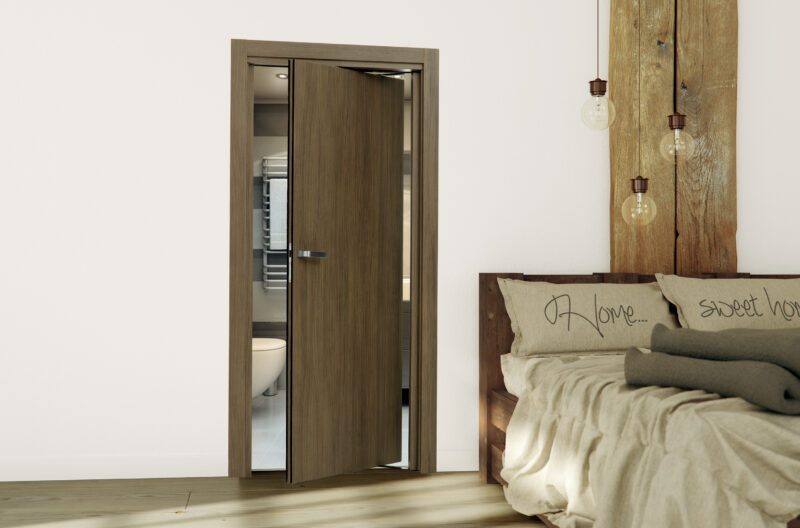
RONDO swing-sliding system
Interior arrangement with internal bathroom doors
A bathroom door should harmonize with the rest of the interior. It is worth paying attention to the color, style, and finish of the door to ensure it matches the overall design of the bathroom and your preferences, while keeping practicality in mind. Here are a few tips:
-
Color
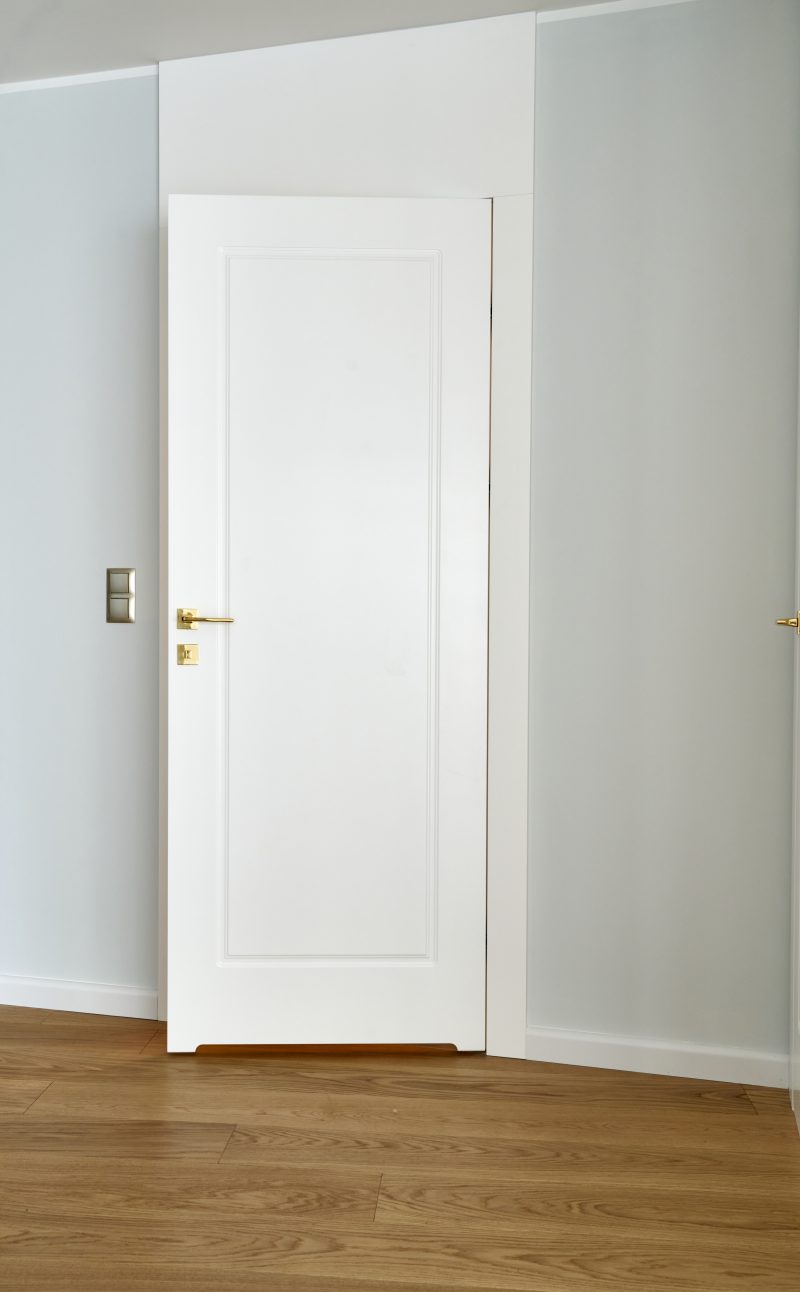
Choose a door in a material and color that will complement the tiles, furniture, and other bathroom fixtures. Inter Door offers a wide color palette featuring over 200 different options. If none of them suit your taste, you can always choose a ready-to-finish option and then apply the same paint used for the bathroom walls. Bathroom doors can also be finished in a different color on each side, giving you greater customization options for your interior.
-
Finish
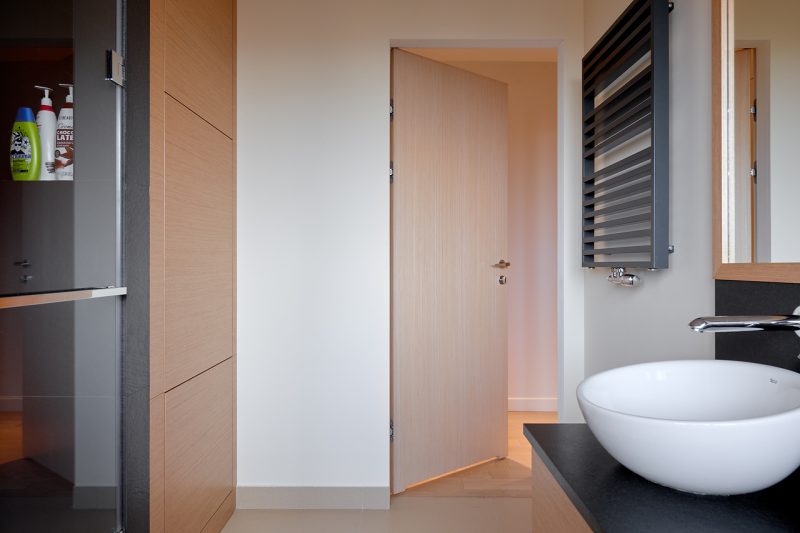
Matte, glossy, glass, or maybe wood? The choice of door finish depends on your preferences and the style of the interior. You can choose, for example, doors with intarsia (decorative inlays in various colors), routings in different configurations, unusual grain or finish layouts, or glass panels utilizing sandblasting techniques.
-
Style
– if your bathroom is designed in a modern style, opt for simple, minimalist, modern doors. For a classic-style bathroom, it is worth considering doors with decorative details, such as traditional routings or moldings. When choosing a bathroom door, consider a model with frosted glass glazing, which ensures privacy and prevents looking inside, while the turned-on light signals someone’s presence.
-
Options
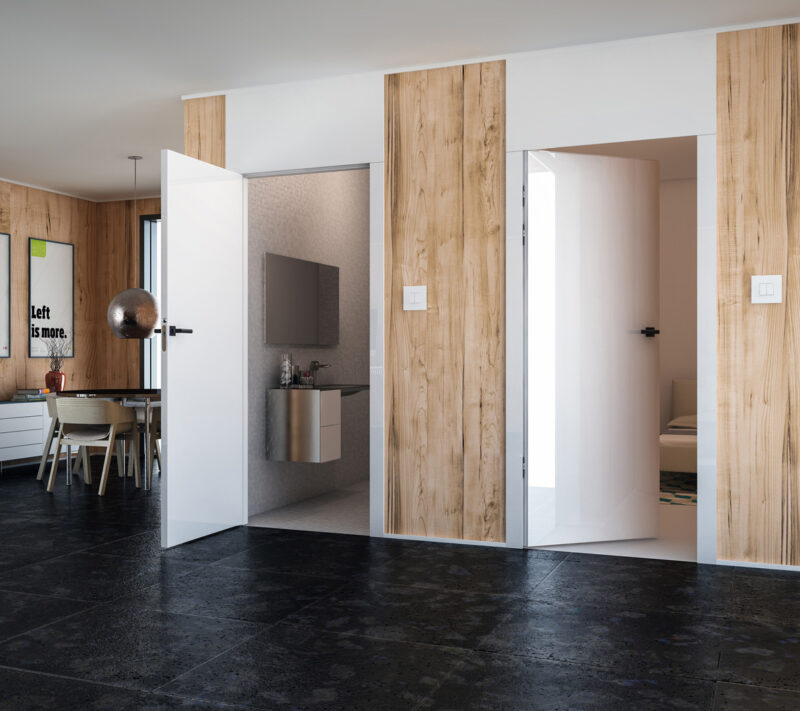
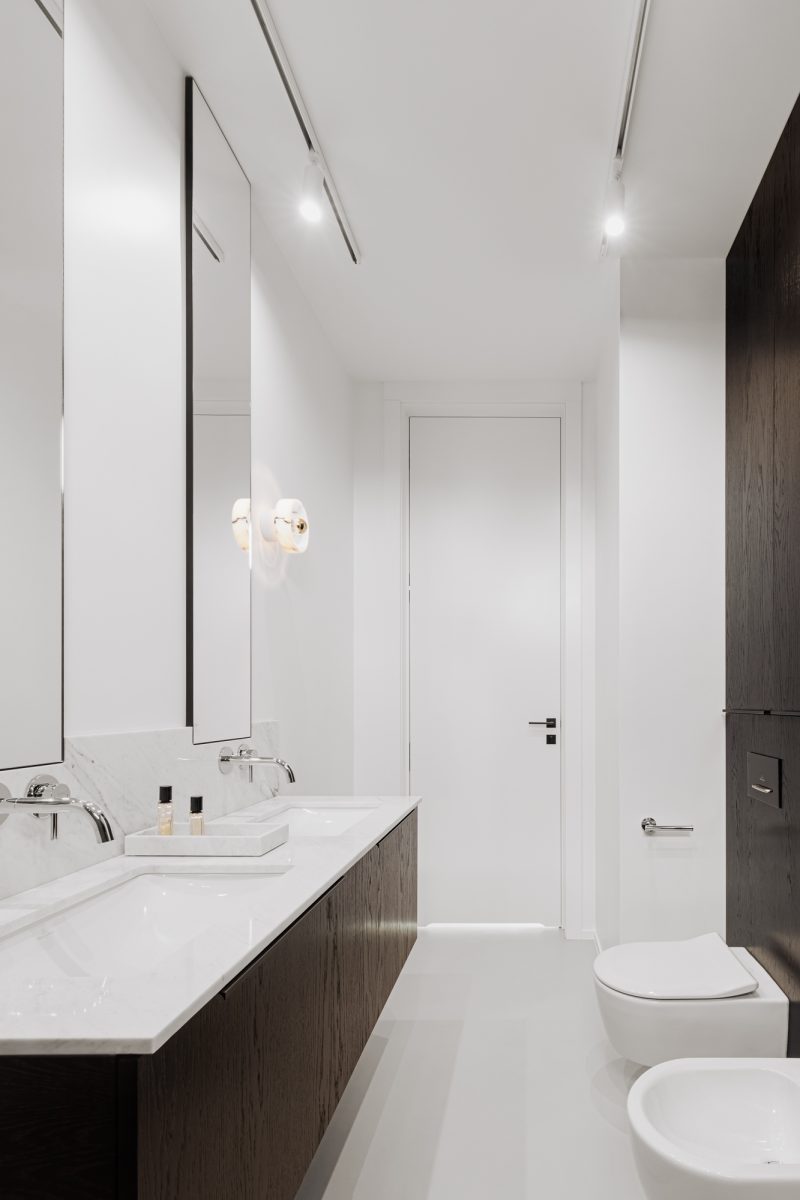
– internal bathroom doors, just like room doors, can be made in non-rebated, rebated, or reverse-rebate versions. They can also be mounted on a concealed (flush) frame, making them nearly invisible in the wall.
-
Size
– there is no issue with making bathroom doors floor-to-ceiling high, just like regular room doors. The width of a bathroom door should be at least 80 cm to ensure comfortable passage.
Frequently Asked Questions about bathroom doors
Which doors are best for a bathroom?
There is no single answer — it depends on the size of the room, the style of the interior, and your budget. The most important criteria are moisture resistance, good ventilation, and proper sizing. For small bathrooms, it is worth considering sliding doors or the RONDO system. For larger ones — classic hinged doors with frosted glazing.
Are wooden doors suitable for a bathroom?
Yes, provided they are properly protected. Key factors include: a moisture-resistant lacquer or foil, a moisture-resistant door frame, and protecting the base of the frame at floor level — for example, with Corian material, which creates a tight barrier against water.
What is the minimum width for a bathroom door?
The recommended minimum is 80 cm — this width ensures comfortable passage and meets accessibility requirements for people with disabilities. In older buildings, 70 cm openings can sometimes be found, but it is worth aiming for a wider solution if the wall structure allows it.
Do bathroom doors have to have ventilation?
Formally, there is no general regulation mandating grilles in doors, but natural gravity ventilation requires free airflow through rooms. In practice, a ventilation undercut or a grille in the door is essential for the bathroom to vent properly and prevent moisture accumulation.
Find the perfect door for your bathroom
Moisture, ventilation, privacy, style — a bathroom door must balance more requirements than any other door in the home. If you already know what you are looking for, we invite you to browse our product range. If you have doubts — our experts will help you choose a solution tailored to your specific case.